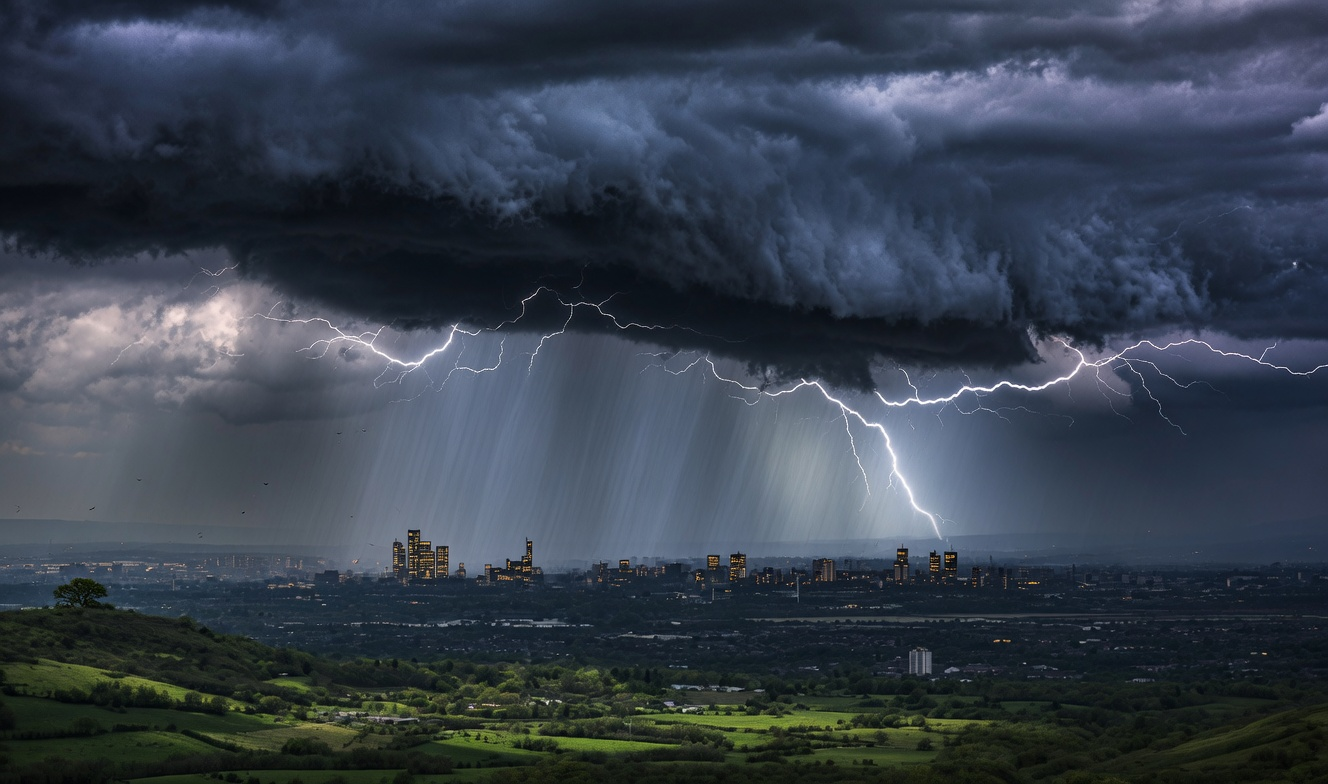
UK Weather Set for Dramatic Change as Heat Gives Way to Thunderstorms and Heavy Rain
Britain’s prolonged spell of scorching sunshine could soon end with an abrupt and potentially stormy change, as forecasters warn that the return of rain may bring thunderstorms and intense localised downpours.
Large parts of the country have endured more than a week of dry, warm and overwhelmingly sunny conditions. Lawns have turned brown, garden plants have struggled and the landscape in many areas has begun to look noticeably parched.
For households, gardeners and farmers watching the skies for any sign of relief, the latest long-range outlook offers some hope. However, the expected breakdown in the weather is unlikely to arrive evenly across the United Kingdom.
The Met Office has indicated that the high-pressure system responsible for the settled conditions should gradually weaken, allowing areas of rain to move into parts of the country. Some showers could reach southern and south-western England over the next few days, although many other regions are expected to remain dry for longer.
Forecast guidance suggests north-western parts of Britain may experience the first more widespread rainfall. Southern and south-eastern areas could continue to face warm and relatively dry conditions before the change becomes more established.
The period around 25 and 26 July is currently being highlighted as offering an increased possibility of rain. As with all longer-range forecasts, the precise timing, location and intensity may still change as weather systems develop.
What makes this transition particularly significant is the contrast between the hot, settled air currently dominating Britain and the cooler, more unstable conditions attempting to move in. When these different air masses meet, the atmosphere can become highly energetic.
As a result, the first meaningful rain may not arrive as a gentle, steady soaking. Forecasters have warned of the possibility of thunderstorms, sudden bursts of heavy rain and sharply varying conditions over relatively short distances.
One town could experience an intense downpour while another community only a few miles away remains almost completely dry. This localised nature of summer storms often makes them difficult to predict with complete accuracy until much closer to the time.
For many people, the sight of dark clouds will come as a genuine relief. After days of uncomfortable heat and repeated watering of struggling gardens, even a short period of rainfall may feel welcome.
Yet there is also a frustrating irony. Ground that has become very dry can struggle to absorb large amounts of water quickly. A sudden downpour may therefore run across hard surfaces rather than soaking gradually into the soil, potentially causing temporary surface-water problems in vulnerable locations.
This is why a dramatic thunderstorm is not always as beneficial as several hours of moderate rain. Gardens, reservoirs and agricultural land generally gain more from persistent, manageable rainfall than from a brief but violent burst.
The emotional response to the forecast is understandable. Britain is famous for complaining about rain, but prolonged heat has a way of changing people’s perspective. When grass loses its colour and plants begin to wilt, grey skies can suddenly appear reassuring rather than gloomy.
There is also a wider sense of unease that often accompanies increasingly unpredictable weather. A settled summer spell may be enjoyable for holidays and outdoor events, but its effects can become more serious when dry conditions persist.
Once the unsettled weather arrives, temperatures are expected to move closer to the seasonal average. The change should bring cooler days, fresher nights and a more familiar mixture of sunshine, cloud and showers.
It would not necessarily mean the end of summer. Instead, Britain may return to the changeable pattern that usually defines the season, with dry intervals interrupted by rain and occasional thunderstorms.
For now, forecasters will continue to monitor the breakdown of high pressure and the development of incoming weather fronts. The precise details remain uncertain, but the broader message is becoming clearer: the heat is unlikely to last indefinitely, and when the change finally comes, it could arrive with considerable force.
After days of relentless sunshine, Britain’s first proper rainfall may feel like a welcome reset. Nevertheless, residents are being encouraged to follow updated local forecasts, particularly as thunderstorms can develop rapidly and affect neighbouring areas very differently.
