“`markdown
Starmer’s Final Peerage List Draws Fresh Fire Over Lords ‘Gerrymandering’
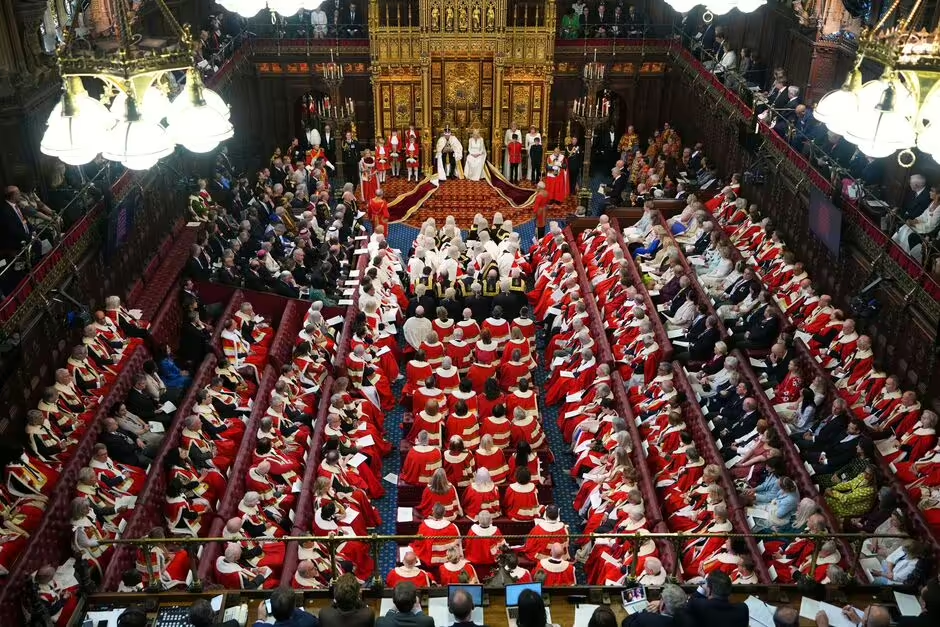
Outgoing Prime Minister Sir Keir Starmer is expected to appoint nearly 20 new Labour peers to the House of Lords in one of his last acts before leaving office, prompting accusations that he is reshaping the upper chamber for partisan advantage.
The appointments, reportedly due to be confirmed by the House of Lords Appointments Commission on Monday, would bring the total number of Labour peers created by Sir Keir to 135 in just two years. That figure already exceeds the 92 hereditary peers who lost their seats earlier this year under the Government’s reforms.
While Labour sources insist the new list is necessary to correct an imbalance left after 14 years of Conservative government, critics argue the distribution is conspicuously one-sided. Labour is set to receive 19 new peerages, compared with just four for the Conservatives and five for the Liberal Democrats. Reform UK has so far received none.
**Numbers that tell their own story**
The disparity has not gone unnoticed. Conservative sources have described the move as a “blatant attempt to gerrymander the Lords”, accusing Labour of discarding constitutional convention for short-term political gain. They point out that the Liberal Democrats have been awarded more new peers than the official opposition, despite the Conservatives holding significantly more seats in the Commons.
One senior Tory source told The Times that the pattern suggested an informal understanding between Labour and the Liberal Democrats in the upper house. “The Labour Party knows the Liberal Democrats in the House of Lords will vote with them,” the source said. “After votes at 16 and postponing council elections, giving Ed Davey more peers than the official opposition just stinks.”
Labour has pushed back, noting that several former hereditary peers from the Conservative benches were able to convert their seats into life peerages, which accounts for part of the difference in the latest round of appointments.
Downing Street has declined to comment on what it describes as “speculation”.
**A system Sir Keir once called indefensible**
The controversy carries particular weight because of Sir Keir’s own past words. Before entering government, he described the current system of appointments as “indefensible” and criticised previous Conservative prime ministers for handing peerages to “cronies and lackeys”. Now, in his final weeks in office, he appears poised to use the very same mechanism he once condemned.
For many observers, this moment captures something deeper than a simple row over numbers. It speaks to the long-standing tension between political necessity and constitutional principle — and the quiet erosion of public trust that occurs when those principles appear to bend under the weight of partisan calculation.
**The human cost of institutional cynicism**
Beyond Westminster, these appointments land differently. For voters already weary of politics, each new list of peers can feel like confirmation that the system serves those already inside it rather than the country at large. The House of Lords was meant to provide sober, independent scrutiny. When its composition is shaped so obviously by the outgoing prime minister’s preferences, that claim becomes harder to sustain.
There is a particular melancholy in watching a leader who rose promising to restore standards in public life leave office in a way that invites exactly the same accusations he once levelled at others. It is not simply about the 19 names on a list. It is about the cumulative effect of these moments — the small, repeated signals that rules are flexible when power is at stake.
Ordinary citizens do not spend their days studying the composition of the Lords. But they notice when the gap between political rhetoric and political behaviour widens. They feel it in the quiet, private cynicism that creeps in when they hear yet another story about jobs for the boys and girls. That cynicism is not loud. It does not always turn into protest. But it steadily undermines the consent on which democratic institutions ultimately depend.
**What legacy will Sir Keir leave behind?**
Sir Keir’s supporters will argue that he is simply completing necessary work to rebalance a chamber long skewed by Conservative appointments. They will point to the removal of hereditary peers as a genuine, long-overdue reform. Yet the manner of these final appointments risks overshadowing that achievement.
The deeper question is not whether Labour “needs” more peers to pass its legislation. It is whether the way those peers are chosen still commands public respect. When the process feels transactional rather than principled, something important is lost — not just in constitutional theory, but in the everyday belief that Britain’s institutions are bigger than the individuals who temporarily occupy them.
As Sir Keir prepares to step down, his final list of peerages will form part of his legacy whether he intends it or not. It will be remembered not only for who received a title, but for what it revealed about the gap between the standards he once demanded and the choices he ultimately made.
In British politics, the last acts of a prime minister often reveal more than the carefully managed statements of their early years. This one appears to be no exception.
“`
