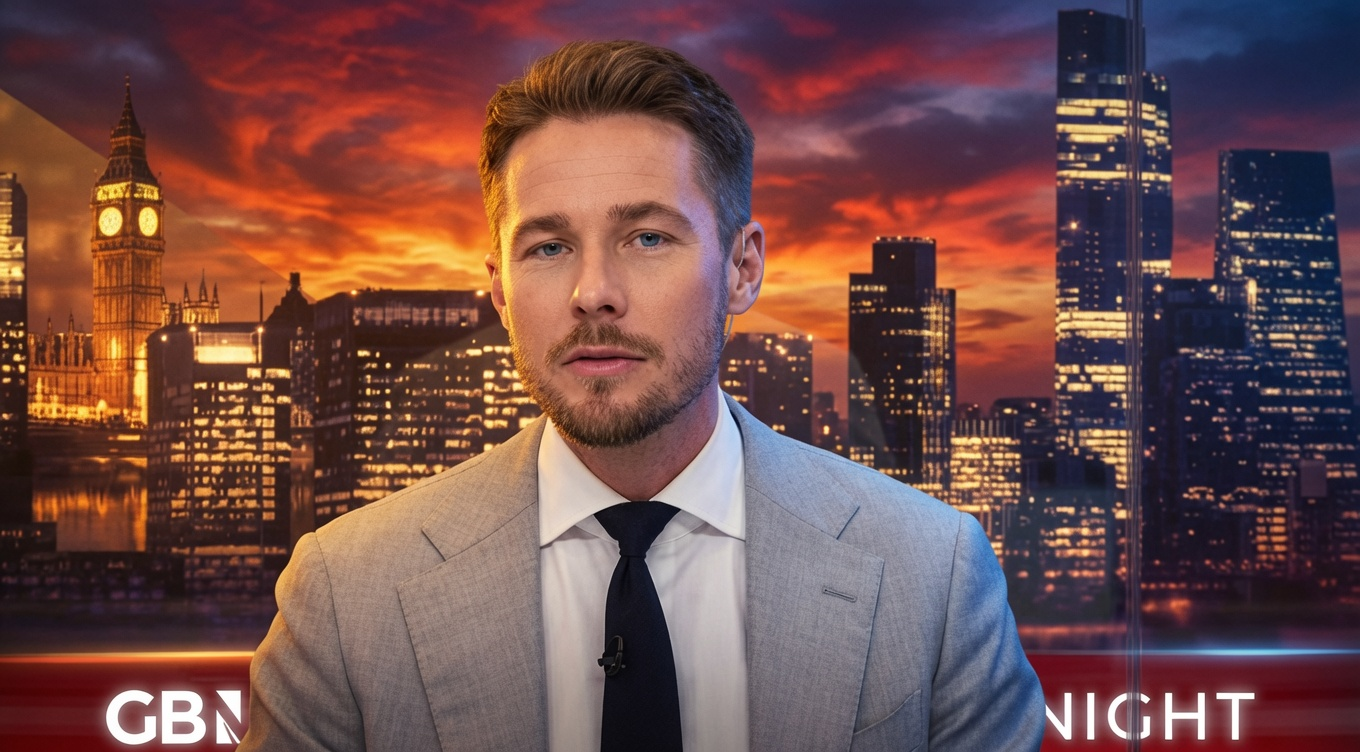
GB News Faces More Than 9,000 Ofcom Complaints Following Controversial Pride Debate
GB News has received 9,315 Ofcom complaints following comments made during a live discussion about Pride events and whether they are appropriate for children.
The remarks were broadcast on Alex Armstrong Tonight on 5 July. Ofcom confirmed that 9,058 complaints were submitted during one week alone, taking the overall total connected to the programme to more than 9,300.
An Ofcom spokesperson said the complaints concerned statements made by contributor Caroline Farrow during the debate.
The number of complaints does not automatically mean that broadcasting rules were broken. Ofcom must first assess the programme and decide whether there are grounds to open a formal investigation.
However, the scale of the public reaction has placed both the programme and GB News under intense scrutiny.
Comments Made During Live Pride Discussion
Farrow appeared alongside Liberal Democrat councillor Mathew Hulbert and presenter Alex Armstrong to discuss whether Pride celebrations are suitable for younger audiences.
During the debate, Farrow described the recent Pride in London event as a “very sexualised display” and argued that the modern Pride movement had expanded beyond campaigning for gay rights.
She then made a series of highly controversial remarks in which she appeared to associate Pride with extreme sexual behaviour and people who pose a risk to children.
The comments immediately drew criticism because they appeared to connect LGBTQ+ celebrations with paedophilia — a damaging and historically persistent allegation that campaigners say has long been used to stigmatise gay people.
Armstrong challenged the suggestion during the live broadcast. He said that he had attended Pride the previous year while filming for GB News and believed that the overwhelming majority of people had participated for positive reasons.
He also made clear that he did not accept the characterisation of Pride as being filled with dangerous individuals.
The exchange demonstrated one of the greatest risks of live broadcasting. A discussion can move from a legitimate debate about age-appropriate events into sweeping claims about an entire community within seconds.
Once such words have been broadcast, a later clarification may provide important context, but it cannot completely erase the hurt or anger caused at the time.
Public Figures Call for Ofcom Investigation
The comments prompted strong criticism from viewers, LGBTQ+ campaigners and public figures.
Drag Race UK performer Bimini and Green Party leader Zack Polanski were among those calling for Ofcom to investigate the broadcast.
Many people argued that the remarks repeated a deeply offensive stereotype rather than contributing meaningfully to the question of whether particular parts of Pride events should be open to children.
One viewer wrote on social media that the controversy showed why Pride remained necessary. Others described the comments as “horrific” and questioned how such claims had been allowed to appear on television.
There is an important distinction between examining whether specific public events contain adult themes and making allegations about LGBTQ+ people more broadly.
Parents are entitled to discuss what is appropriate for their children, and broadcasters should be able to host difficult conversations about safeguarding, public conduct and age restrictions. Those discussions, however, must be based on evidence and should not portray an entire minority group as inherently suspicious or dangerous.
GB News Distances Itself from Contributor’s Remarks
GB News said Farrow had been expressing her personal views during a live debate and that her comments did not represent the broadcaster’s editorial position.
In a statement issued to PinkNews, the channel said the remarks had been “robustly and repeatedly challenged” by Armstrong and another participant.
GB News added that it took its responsibilities as a regulated broadcaster seriously and believed it had complied with its obligations under the Ofcom Broadcasting Code.
The broadcaster’s response focuses on a central question that Ofcom may have to consider: whether challenging an offensive statement during a live programme provided sufficient protection for viewers and ensured appropriate balance.
A presenter cannot always predict exactly what a guest will say. Nevertheless, broadcasters remain responsible for the material they transmit, particularly when discussions involve protected groups, allegations of criminal behaviour or claims that could encourage hostility.
Robust debate has an important place in British broadcasting, but “robust” should not become a convenient label for statements that lack evidence or unfairly target vulnerable communities.
Armstrong Later Rejects the Comments
Armstrong addressed the controversy on his programme the following week and said he “fundamentally rejects” the suggestion that gay Pride should be associated with paedophilia.
He told viewers that GB News welcomed difficult debates and did not intend to become an echo chamber. He said this made it particularly important for presenters and other guests to challenge comments that could be considered homophobic or deeply offensive.
Armstrong described the association between gay people and child abuse as an old and harmful trope that had been used for many years to demonise the LGBTQ+ community.
He said the original discussion was supposed to focus on whether Pride events were suitable for children and argued that the controversial comments had no proper place in that debate.
In his view, they were “lazy and offensive arguments” that did not represent either his position or that of the channel, where many LGBTQ+ employees work.
His intervention was direct and significant. Rather than offering a vague apology for any offence caused, he explained why he believed the claim was wrong and acknowledged the history behind the stereotype.
That distinction matters. People affected by inflammatory language often want more than a carefully worded expression of regret; they want to know that the substance of the allegation is being rejected.
Presenter Defends His Own Position on Pride
Armstrong also criticised those whom he accused of misrepresenting his personal views and attempting to portray him as homophobic because he opposes aspects of Pride.
He told viewers that he is openly gay but rarely discusses his sexuality because he considers it only a small part of his identity. He added that being gay did not determine his political beliefs.
Armstrong maintained his opinion that Pride events are not always suitable for children. He pointed to alcohol, revealing clothing, political messaging and adult products that he said could appear even during family-focused sections of celebrations.
His comments reveal the complexity of the wider debate.
It is possible to reject offensive generalisations about LGBTQ+ people while still questioning whether every area, activity or display at a large public festival is appropriate for every age group.
Pride events are not identical. They vary between cities, organisers and individual areas within the same celebration. Some provide clearly designated family spaces, while others include performances or displays aimed at adults.
A responsible conversation should therefore consider specific evidence, event policies and safeguarding arrangements rather than presenting Pride as either completely beyond criticism or inherently threatening.
Ofcom Complaints Place Pressure on Broadcaster
The volume of complaints is likely to intensify attention on how GB News manages live contributors and controversial discussions.
Ofcom will assess whether the programme may have breached sections of the Broadcasting Code concerning harm, offence, due impartiality or discriminatory treatment.
Receiving thousands of complaints is not proof of wrongdoing, and regulators do not decide cases through a public vote. A single complaint can lead to serious action if a programme clearly breaches the rules, while thousands may result in no further action if the broadcast is judged compliant.
Even so, more than 9,000 complaints represent a substantial expression of public concern.
For GB News, the controversy is also a question of trust. Audiences may accept that live television is unpredictable, but they expect broadcasters to intervene quickly when discussions move into serious and unsupported allegations.
The channel’s defence is that Armstrong and other participants did exactly that. Critics may respond that the remarks should have been stopped more decisively or followed by an immediate on-air correction.
Free Speech and Editorial Responsibility
The incident has once again raised questions about the limits of free expression on regulated television.
Broadcasters should not avoid controversial subjects merely because they may generate complaints. Open debate is a vital part of democratic society, and difficult opinions should often be examined rather than hidden.
But freedom of expression does not remove the need for editorial judgement.
When a speaker makes a claim that could encourage suspicion towards an entire group, a broadcaster must consider whether the statement is accurate, whether it has been properly challenged and whether its inclusion serves a genuine public-interest purpose.
The most valuable debates are not necessarily the loudest. They are the ones that allow disagreements to be tested with facts, compassion and a willingness to recognise the humanity of those being discussed.
Behind the arguments, complaints and political reactions are ordinary LGBTQ+ people who may hear such statements as a suggestion that their identity makes them dangerous. For many, that is not merely an abstract media controversy. It touches memories of discrimination, rejection and fear.
At the same time, parents who raise sincere questions about age-appropriate content should not automatically be dismissed as prejudiced. Their concerns can be discussed respectfully without resorting to allegations that stigmatise millions of people.
What Happens Next?
Ofcom will carry out an initial assessment of the complaints before deciding whether to launch a formal investigation.
Should an investigation begin, the regulator would consider the programme in its full context, including Farrow’s exact remarks, the responses from Armstrong and Hulbert, the nature of the discussion and the expectations of the audience.
GB News would also have an opportunity to explain its editorial decisions and the steps taken to challenge the comments.
Whatever Ofcom ultimately decides, the controversy has already become a lesson in the responsibilities that accompany live broadcasting.
A debate about children’s access to Pride events could have remained focused on safeguarding, age restrictions and the organisation of public spaces. Instead, one inflammatory comparison overwhelmed the original subject and left thousands of viewers feeling angry or hurt.
The strongest response will not come from cancelling legitimate debate. It will come from improving it.
Broadcasters should continue discussing difficult issues, but they must ensure that disagreements are grounded in evidence and that contributors are not permitted to turn concerns about individual events into harmful claims about entire communities.
British television is at its best when it challenges its audience without demeaning people. Achieving that balance is not always easy, particularly during a live programme, but it remains one of the most important duties of a regulated broadcaster.
